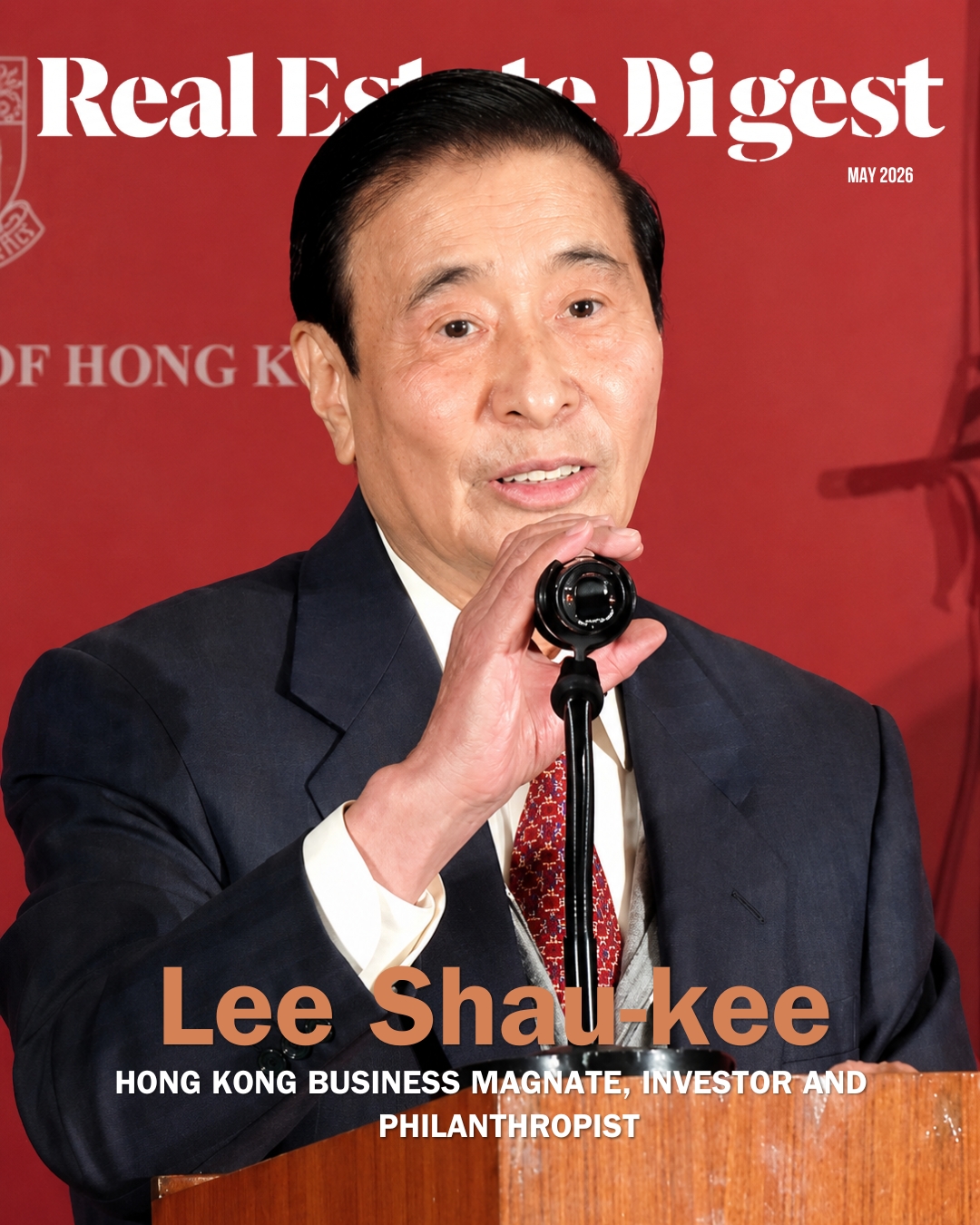
Few business figures shaped modern Hong Kong real estate as profoundly as Lee Shau Kee. Over several decades, the billionaire developer transformed Henderson Land Development into one of the most influential property companies in Asia. Through disciplined land acquisition, long term planning, and strategic investment, Lee helped redefine Hong Kong’s skyline while building one of the largest real estate fortunes in the world.
While global audiences often associate Hong Kong with soaring towers and dense urban development, fewer understand the business strategy and vision behind the city’s transformation. Lee Shau Kee stood at the center of that evolution. His projects extended beyond luxury towers and commercial complexes. They reflected a broader understanding of urban growth, land scarcity, and economic momentum in one of the world’s most competitive property markets.
Over time, Lee earned a reputation not only as a billionaire entrepreneur, but also as one of Asia’s most influential real estate developers. His company, Henderson Land Development, became a dominant force in residential housing, office buildings, hotels, retail properties, and infrastructure investment across Hong Kong and mainland China.
Early Life of Lee Shau Kee
Lee Shau Kee was born in 1928 in Guangdong Province, China. He grew up in a family involved in gold and currency trading, which exposed him to business and finance from an early age. During the political and economic instability of the 1940s, Lee moved to Hong Kong, a city that would soon emerge as one of Asia’s most important financial and commercial centers.
At the time, Hong Kong was undergoing rapid population growth and urbanization. Refugees and migrants arriving from mainland China created rising demand for housing and infrastructure. Lee recognized that opportunity early.
In the 1950s, he entered the real estate industry alongside several partners. These early ventures laid the groundwork for what would later become some of Hong Kong’s largest property companies.
Lee’s understanding of land value proved especially important. He recognized that Hong Kong’s limited supply of developable land would continue driving long term property demand. That insight became central to his investment philosophy for decades.
Founding of Henderson Land Development
In 1976, Lee Shau Kee founded Henderson Land Development, a company that would grow into one of Hong Kong’s leading property developers.
The timing was significant. Hong Kong’s economy was expanding rapidly during the 1970s. Manufacturing, trade, and finance fueled rising incomes and urban growth. Demand for residential and commercial real estate surged.
Henderson Land entered the market with an aggressive but calculated approach. The company focused heavily on land acquisition, particularly in areas with long term development potential. Rather than chasing only immediate profits, Lee often invested with a multi decade perspective.
This strategy allowed Henderson Land to build an enormous land bank that supported future projects across Hong Kong and mainland China.
Over the years, the company developed large scale residential communities, office towers, mixed use projects, hotels, and shopping centers. Its portfolio expanded steadily while maintaining a strong focus on premium locations.
Lee Shau Kee’s Real Estate Strategy
What distinguished Lee Shau Kee from many competitors was his patience.
Hong Kong’s property market has long experienced dramatic cycles. Prices rise sharply during economic booms and face pressure during downturns. Many developers focused on short term gains, but Lee consistently emphasized long term land ownership and strategic positioning.
He understood that prime urban land in Hong Kong remained one of the world’s most valuable resources. As a result, Henderson Land often held properties for extended periods before redevelopment or sale.
Lee also recognized the importance of diversification within real estate. Henderson Land did not rely solely on residential apartments. The company expanded into office properties, retail developments, hotels, and infrastructure investments.
This diversified portfolio helped stabilize revenue during market fluctuations. Commercial properties generated recurring rental income, while residential projects delivered significant development profits.
Under Lee’s leadership, Henderson Land became known for disciplined financial management and carefully timed acquisitions. These qualities helped the company navigate economic uncertainty while continuing to expand.
Henderson Land’s Impact on Hong Kong’s Skyline
As Hong Kong developed into a global financial hub, Henderson Land played a major role in reshaping the city’s urban landscape.
The company participated in some of the territory’s most prominent residential and commercial projects. Its developments appeared across Central, Kowloon, and the New Territories.
Luxury apartment towers became a major part of the company’s identity. These projects targeted affluent local buyers, overseas investors, and business executives seeking prime locations and premium amenities.
At the same time, Henderson Land invested heavily in commercial real estate. Office towers in Hong Kong’s central business districts became increasingly valuable as multinational corporations expanded their regional operations.
One of the company’s most notable commercial developments is The Henderson, a landmark skyscraper in Central designed by Zaha Hadid Architects. The project reflects Henderson Land’s ambition to compete at the highest level of global commercial real estate.
The tower’s curved glass design and advanced engineering represent the modernization of Hong Kong’s office market. More importantly, it demonstrates how Henderson Land continues investing in high profile developments even after decades of market leadership.
Expansion Into Mainland China
Like many major Hong Kong developers, Henderson Land eventually expanded into mainland China.
China’s economic reforms and urbanization created enormous opportunities for property development. Cities across the country experienced rapid growth in housing demand, retail expansion, and commercial construction.
Henderson Land invested in residential and mixed use developments in several mainland cities. These projects allowed the company to diversify geographically while participating in China’s economic rise.
Lee Shau Kee approached mainland expansion carefully. Rather than pursuing reckless growth, Henderson Land focused on strategic locations and partnerships. This measured approach reflected Lee’s broader philosophy of disciplined investment.
Although mainland China introduced new opportunities, Hong Kong remained the core of Henderson Land’s identity and profitability.
Lee Shau Kee and Hong Kong’s Property Billionaires
During his career, Lee Shau Kee often ranked among Asia’s wealthiest individuals.
Media outlets frequently compared him to other major Hong Kong property tycoons such as Li Ka shing and the Kwok family. Together, these developers shaped much of the city’s modern real estate infrastructure.
Lee earned the nickname “Hong Kong’s Warren Buffett” because of his investment success and disciplined financial approach. He also became known for his expertise in stock market investing alongside his property empire.
Still, real estate remained the foundation of his fortune.
The value of Henderson Land’s holdings grew dramatically over time as Hong Kong property prices climbed. Prime office buildings, luxury residences, and strategic land reserves became increasingly valuable assets in one of the world’s most expensive cities.
Leadership Style and Business Philosophy
Lee Shau Kee built his reputation on caution, patience, and long term thinking.
Unlike some high profile billionaires, he maintained a relatively understated public image. He focused more on operations and investment strategy than media attention.
Business observers often described him as pragmatic and financially disciplined. He believed in preserving liquidity, managing risk carefully, and acquiring assets with long term appreciation potential.
This philosophy shaped Henderson Land’s culture. The company became known for conservative financial management compared to some competitors that relied heavily on debt fueled expansion.
Lee also valued timing. He often acquired land or assets during periods of market uncertainty when prices softened. That approach allowed Henderson Land to secure valuable properties before future market recoveries.
Philanthropy and Legacy
Beyond real estate, Lee Shau Kee became known for philanthropy and education initiatives.
He donated substantial sums to universities, educational institutions, and social programs in Hong Kong and mainland China. His charitable work focused heavily on education, youth development, and poverty reduction.
Lee believed education created long term social mobility and economic opportunity. Several institutions and scholarship programs benefited from his contributions.
Even after stepping back from day to day management, Lee remained closely associated with Henderson Land’s long term vision. Leadership gradually transitioned to the next generation of the Lee family while maintaining the company’s strategic direction.
The Future of Henderson Land
Today, Henderson Land remains one of Hong Kong’s largest and most influential real estate developers.
The company continues investing in premium office towers, residential communities, retail centers, and infrastructure projects. As Hong Kong evolves, Henderson Land faces new challenges tied to sustainability, changing work patterns, and economic uncertainty.
Yet many of the principles established by Lee Shau Kee continue shaping the company’s strategy. Long term land ownership, disciplined investment, and premium urban development remain central to its approach.
The company also faces growing pressure to address sustainability and environmental efficiency in modern construction. New developments increasingly incorporate energy efficient technologies, smart building systems, and environmentally conscious design strategies.
Projects like The Henderson demonstrate how the company aims to balance architectural innovation with commercial performance.
Lee Shau Kee’s Lasting Influence on Asian Real Estate
Lee Shau Kee’s impact extends far beyond individual buildings.
He helped shape one of the world’s most competitive property markets through strategic land development and long term urban planning. Henderson Land’s projects influenced how Hong Kong evolved as a financial and residential center.
His career also reflects the broader story of Hong Kong’s economic rise. As the city transformed from a manufacturing hub into a global financial powerhouse, developers like Lee played a crucial role in building the infrastructure and real estate networks that supported growth.
Few entrepreneurs understand urban land value as effectively as Lee Shau Kee did. He recognized early that real estate in global gateway cities would remain one of the world’s most important long term assets.
That insight helped him build a property empire worth billions and secure his place among Asia’s most influential real estate developers.
Today, Henderson Land stands as a lasting symbol of that vision. Through decades of disciplined expansion, strategic planning, and landmark developments, Lee Shau Kee helped define the modern skyline of Hong Kong and left a permanent mark on Asian real estate history.