The role of restaurants in commercial real estate is changing. Once viewed primarily as conveniences for office tenants or supporting retail uses, restaurants are increasingly becoming central to how owners create energy, identity and a sense of place within office and mixed-use developments.
The shift comes as expectations surrounding commercial properties continue to evolve. Employees, residents and visitors increasingly want environments that offer more than a place to work or complete a transaction. They are looking for destinations where dining, social interaction, wellness and community come together.
For commercial real estate owners, that is creating a new approach to placemaking, one in which hospitality can play a much larger role in attracting people to a property and giving them reasons to stay.
Restaurants as Social Anchors
Restaurants are particularly well positioned to create the kind of activity commercial properties increasingly need. Unlike traditional office amenities that primarily serve tenants during business hours, a destination restaurant can attract employees, nearby residents, business travelers and diners from the surrounding community.
That broader appeal can extend activity beyond the traditional workday and help a property become part of the surrounding neighborhood.
“Restaurants have become a critical part of how modern campuses and communities come to life,” said Justin Nguyen, executive vice president of asset management for EMMES Realty Services. “Our goal at Centerview is to continue creating a destination where customers and visitors genuinely want to spend time, whether that’s for a business lunch, dinner with friends, or simply to experience the energy of the community.”
That strategy is increasingly relevant as office owners consider how their properties fit into a post-pandemic environment shaped by hybrid work and changing expectations around the workplace. A successful office campus today may need to appeal not only to companies leasing space, but also to the people those companies want to bring into the office.
Dining, outdoor areas, wellness offerings and gathering spaces can all contribute to that experience.
Creating a Destination at Centerview
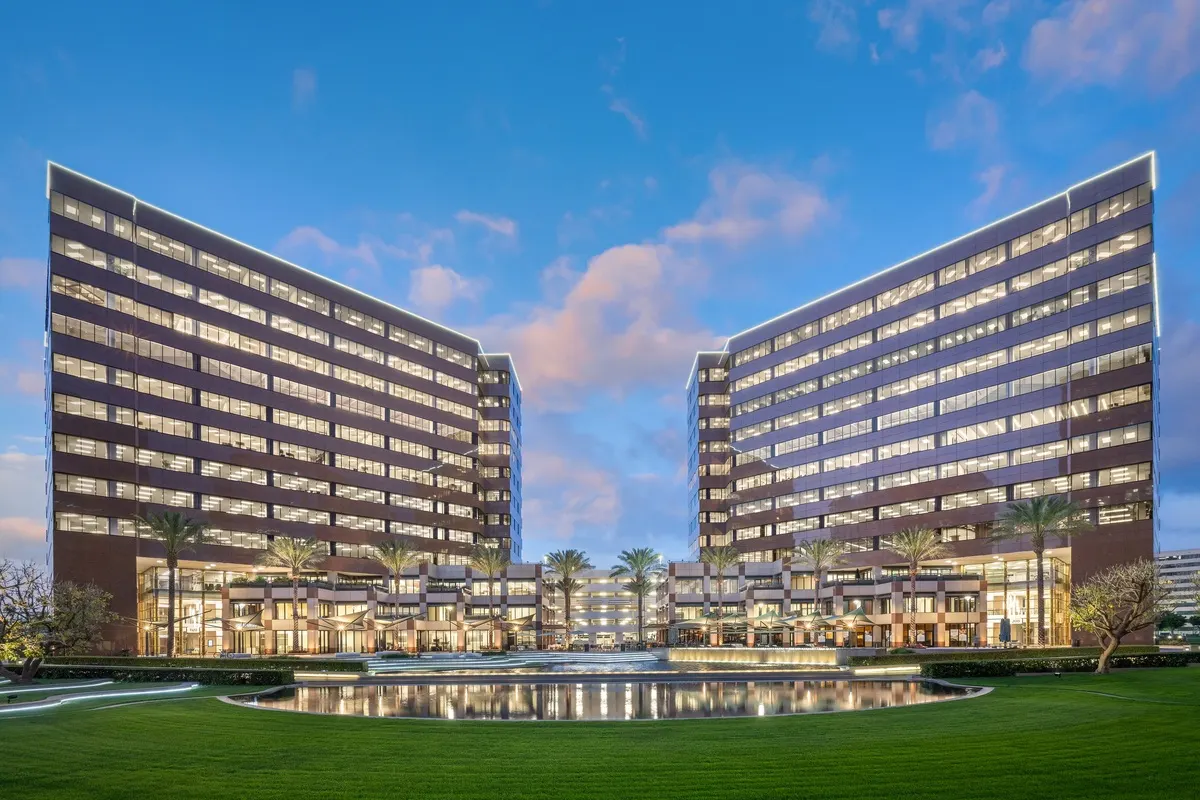
One example of the trend is taking shape at Centerview in Irvine, California, where EMMES Realty Services and funds managed by Oaktree Capital Management are expanding the property’s dining offerings with Fat of the Land.
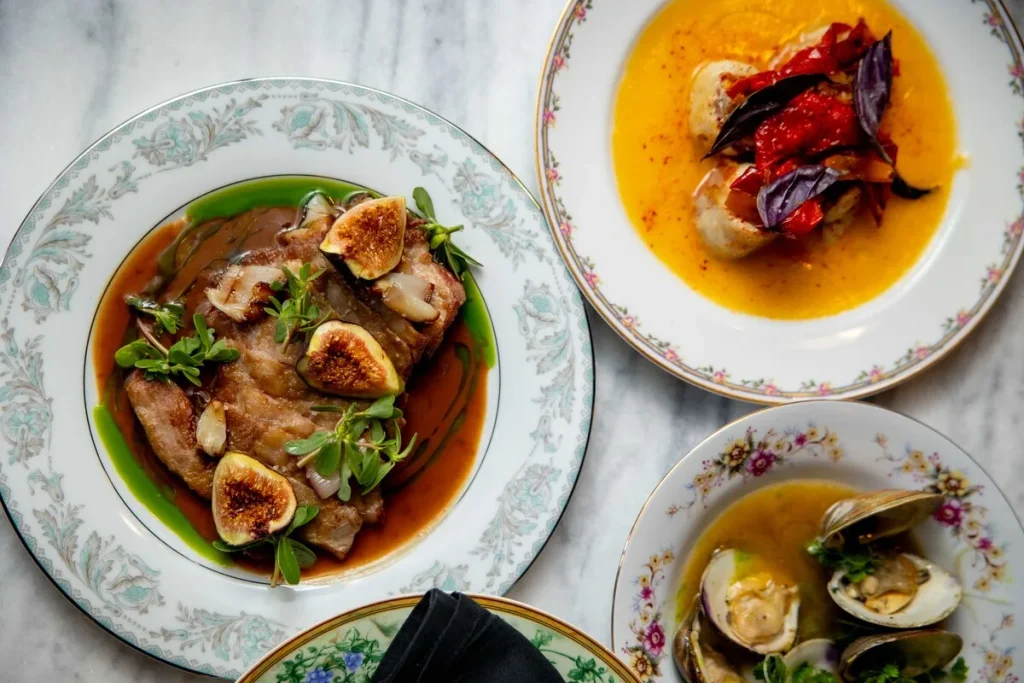
The tapas-driven restaurant from restaurateur Robert Paetz follows the success of its original Santa Ana location, which earned recognition on Yelp’s Top 100 Restaurants list.
For EMMES, bringing Fat of the Land to Centerview is part of a broader effort to create a hospitality-forward environment that serves office tenants as well as Irvine’s surrounding residential and business communities.
“We are incredibly excited to welcome Fat of the Land to the property and continue building a collection of restaurants that create energy, connection, and a true sense of place,” Nguyen said. “Restaurants today are helping define how people experience a community.”
Fat of the Land brings another important element to that strategy: a restaurant designed to function as a destination in its own right.
Its Irvine location carries over the concept’s signature atmosphere while expanding it for a larger space. The restaurant features dramatic lighting, rich textures, marble finishes and vintage-inspired details, with an environment intended to accommodate everything from business gatherings to casual dinners, celebrations and date nights.

The Restaurateur’s Perspective
For restaurant operators, commercial and mixed-use developments can also offer opportunities to reach several audiences from one location. A successful concept can serve office workers during the day while attracting residents and destination diners during evenings and other periods.
Paetz said Irvine’s evolving food culture was an important factor in choosing the location for Fat of the Land’s second restaurant.
“There’s a strong appreciation for quality restaurants and a culture of people who genuinely love food,” Paetz said. “Bringing our tapas menu with a lively neighborhood atmosphere to Irvine just feels like the right fit.”
The relationship between the restaurateur and property owner can be equally important. Operators are not simply looking for available restaurant space. The surrounding environment, complementary tenants and owner’s vision for the property can influence whether a location supports the experience a restaurant wants to create.
“Working with EMMES has been a great experience,” Paetz said. “They really understand the importance of creating thoughtful, experience-driven spaces and curating the right mix of tenants to build something meaningful for the community. That aligns closely with how we approach hospitality.”
Beyond the Traditional Office Amenity
The evolution underway at properties such as Centerview reflects a broader change in the definition of an office environment.
Restaurants, wellness amenities, outdoor spaces and gathering areas can help turn properties that were once primarily occupied during working hours into places that remain active for longer portions of the day.
The strategy may become increasingly significant as residential development expands around historically office-oriented districts such as the Irvine Business Complex and Airport Area. As the boundaries between office, residential, retail and hospitality environments become less rigid, properties have an opportunity to serve multiple communities simultaneously.
For restaurateurs, the same trend opens the door to locations that might once have been viewed primarily through the lens of office traffic.
“People are looking for experiences now, not just transactions,” Paetz said. “Dining has become part of lifestyle culture, and restaurants often become the anchor that makes a space feel vibrant and alive.”
For commercial real estate owners navigating changing workplace habits and tenant expectations, that may be the larger opportunity. The restaurant of the future may no longer simply be an amenity attached to a commercial property. Increasingly, it can be one of the anchors that helps turn the property itself into a destination.